
To clean windows streak free, wash the glass on a cloudy day with warm water and a few drops of dish soap. Remove the liquid with a clean squeegee or lint-free microfiber cloth, then wipe the edges dry. Use as little cleaner as possible, and change dirty clothes often.
Streaks usually have ordinary causes: too much cleaner, dirty clothes, or glass that dries too fast. Fixing those matters more than which product you buy. This guide covers the method, compares common cleaners, and explains when coated glass or window film changes the advice.
Key takeaways
- Streaks mostly come from excess cleaner, dirty or linty cloths, and solution drying too quickly.
- A few drops of dish soap in warm water, or a diluted vinegar solution, suits most household glass.
- If you have Low-E coated glass or tinted film, check the maker’s care guide first. Some advise against squeegees or ammonia.
- Never mix bleach with vinegar or ammonia-based products.
Why windows streak after cleaning
Windows streak when something is left on the glass: soap, dissolved minerals, lint, or dirty water. Direct sun makes this worse because the solution dries before you can remove it. Knowing which cause applies makes the fix much faster.
- Too much cleaner or soap. Excess detergent leaves a film. One guide suggests about one teaspoon of dish soap per gallon of water.
- Dirty water or clothes. A saturated or gritty cloth spreads grime instead of lifting it.
- Lint. Paper towels and kitchen rolls can shed fibers onto wet glass.
- Sun and heat. Warm glass dries the solution too quickly. Hot water also evaporates faster, leaving less working time.
- Hard water. Washing with hard water can leave mineral spots as it dries.
- A worn squeegee blade. Nicks or dried-out rubber leave lines and can scratch the glass.
- Dirty frames and sills. Grime and water on the frame run back onto clean glass.
What you need
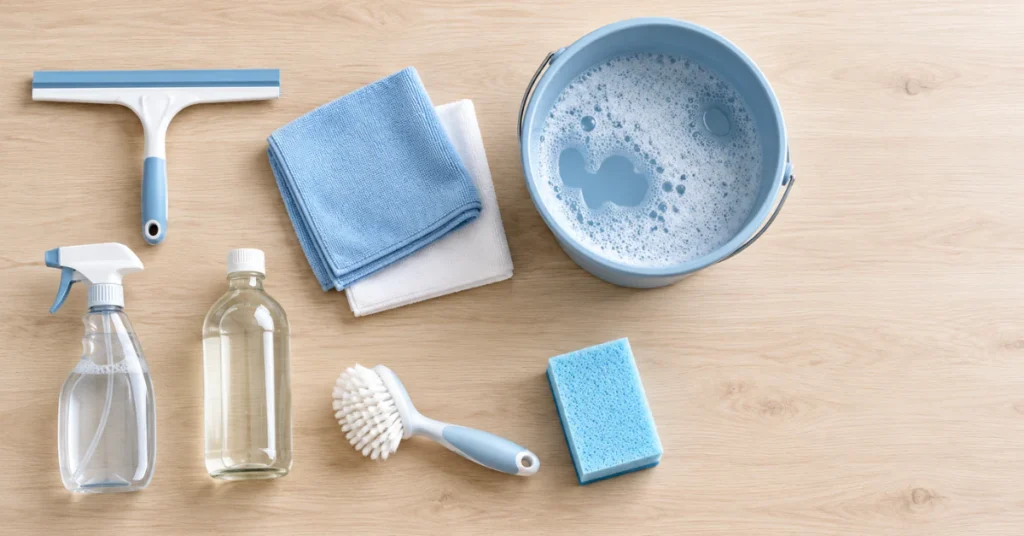
Most of these items are already in a typical home:
- A bucket or spray bottle
- Warm water and mild dish soap
- White vinegar (optional)
- A squeegee with a clean rubber blade
- A sponge, scrubber, or microfiber cloth for washing
- Two or three clean, dry microfiber cloths
- A towel for the sill and floor
- A soft brush or dry cloth for dust
- A stable ladder or extension pole for high windows (see the safety notes below)
How to clean windows streak free, step by step
The reliable sequence is dust, wash, remove the liquid, then detail the edges. Work in shade and do one window at a time. Keep a dry cloth in hand so the solution never dries on the glass before you remove it.
Before you start
- Pick the right time. Choose an overcast day, or clean a window after the sun has moved off it. Use warm rather than hot water, and avoid sudden temperature changes on the glass.
- Remove dust first. Brush or vacuum the frame, sill, and track, and wipe the glass with a dry microfiber cloth. If you have screens, clean them before the glass.
- Protect the area. Lay a towel on the sill and floor to catch drips.
- Mix a mild solution. Add a few drops of dish soap to a bucket of warm water. A common guideline is about one teaspoon per gallon (roughly 5 milliliters per 4 liters). If you use a commercial cleaner, dilute it as the label says.
Squeegee
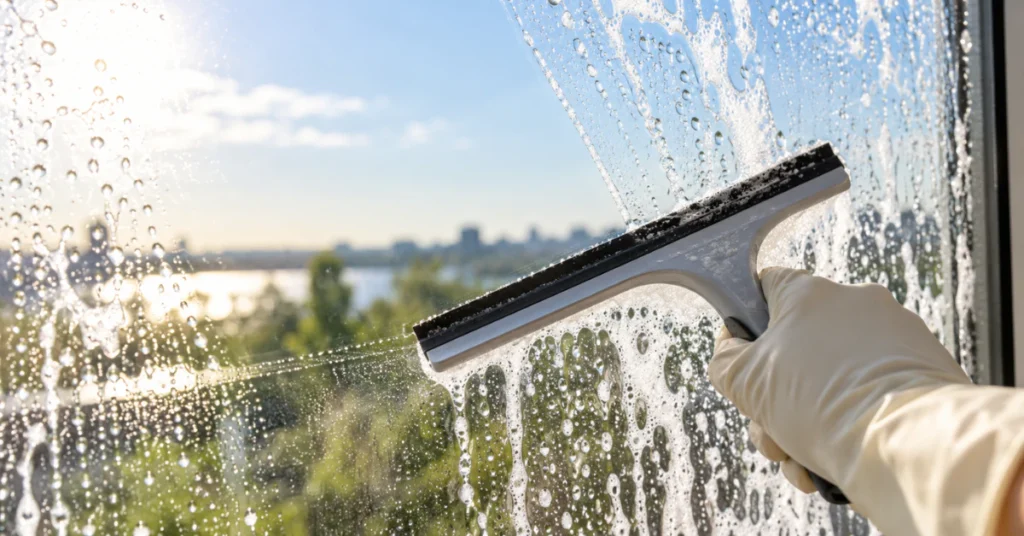
This method suits large, flat panes.
- Wet the glass with a sponge or scrubber, squeezed out so it is not dripping.
- Place the squeegee at the top corner at a slight angle. Pull it steadily across the glass.
- Wipe the blade with a clean cloth after every pass.
- Work down the window with overlapping strokes. Overlap each pass by about an inch so no strip is missed.
- Wipe the edges, frame, and sill with a dry microfiber cloth before water dries there.
Microfiber cloth only
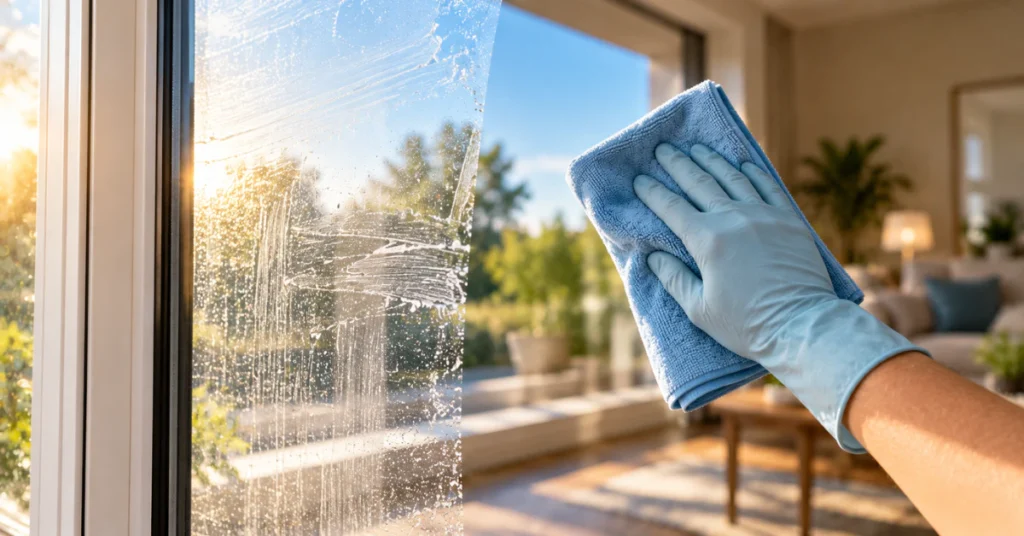
This method suits small windows, awkward corners, and glass where squeegees are discouraged.
- Lightly mist the glass or dampen a cloth. A thin, even layer works better than a soaking one.
- Wipe from the top down, covering the edges.
- Immediately buff with a second, clean, dry microfiber cloth until no moisture remains.
- Swap in a fresh cloth as soon as either one feels damp or gritty.
Check your work
View the glass from an angle, with light coming from the side, to spot smears. A useful trick is to wipe the inside with horizontal strokes and the outside with vertical strokes. A leftover streak then shows you which side it is on.
Which window cleaner works best
No single cleaner wins in every situation. The best choice depends on how dirty the glass is, whether you use a squeegee, and what your window maker recommends.
| Cleaner | Best for | Watch out for |
| Dish soap and warm water | Everyday washing, especially with a squeegee | Too much soap leaves a film, so use only a few drops |
| White vinegar and water | Light grime, hard water spots, a final wipe | Some makers advise against vinegar on frames, seals, or hardware. Never mix it with bleach |
| Ammonia-free commercial glass cleaner | Quick spray-and-wipe jobs and tinted windows | Overspraying leaves residue. Follow the label |
| Ammonia- or alcohol-based cleaner | Greasy glass, only if your maker allows it | Some glass makers don’t recommend these because they can leave streaks. Film installers warn that ammonia can damage tint |
Dilution advice varies. Some glass care guides suggest about one part vinegar to ten parts water, while others allow stronger mixes. Start with the weaker option and increase only if needed.
Special cases that change the advice
Standard advice works for plain glass, but a few window types need adjustments.
Low-E coated glass
Low-E (low emissivity) glass has a very thin metal coating that improves insulation. Some manufacturers say coated glass can be cleaned like uncoated glass, but they advise against squeegees on an exposed coated surface. Incorrect squeegee use can leave marks that are hard to remove. They also advise avoiding metal scrapers and razor blades on the coating. If you are unsure which surface is coated, use the cloth-only method and check the care guide.
Tinted or filmed windows
Window film installers commonly warn that ammonia-based cleaners can damage the film’s adhesive. Use an ammonia-free cleaner, a soft microfiber cloth, and light pressure. For a newly applied film, follow the installer’s curing instructions before cleaning.
Outside and upper-floor windows
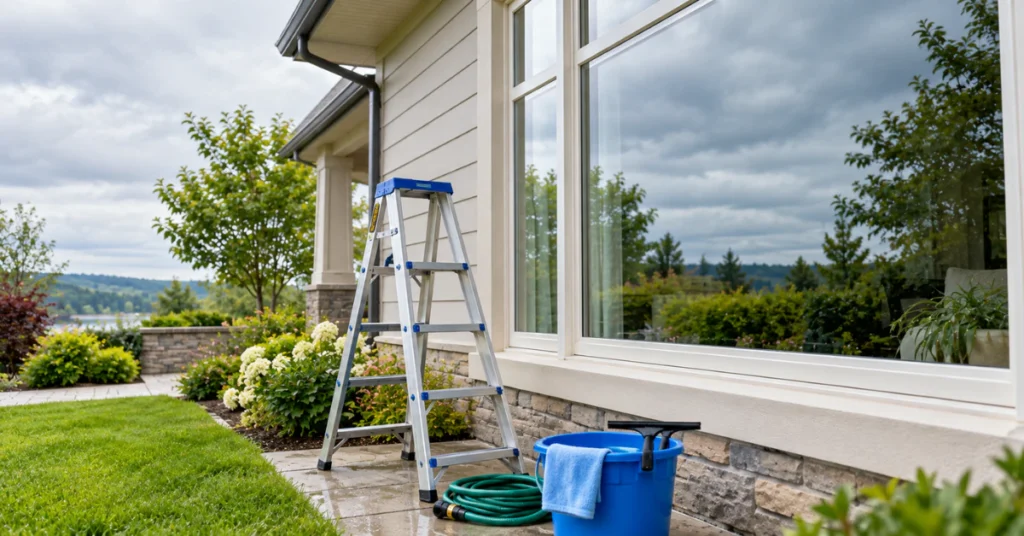
Some windows tilt inward so you can clean the outer surface from inside. For other windows, rinse with a hose first to loosen grit, then wash as above. A step ladder may reach first-floor windows, but higher ones call for an extension pole or a professional. When climbing, face the ladder and keep two hands and one foot, or two feet and one hand, on it.
Common mistakes to avoid
Most streaky results come from a short list of habits:
- Cleaning in direct sun, so the solution dries too fast
- Adding extra soap or spray, which leaves residue
- Using one cloth for the whole house until it is saturated
- Reaching for paper towels or kitchen roll, which can shed lint
- Using a nicked, dried-out, or cracked squeegee blade
- Skipping the frame and sill, so grime and water drip back onto the glass
- Mixing cleaning products, which can create toxic gases
Crumpled newspaper is a long-standing alternative because it absorbs moisture and leaves little lint. Ink can transfer to hands and frames, though, so lint-free microfiber is usually the easier choice.
What to do if streaks appear after drying
Streaks that remain after drying usually mean residue is still on the glass. Rewet the area with clear water or a mild vinegar solution, then dry it with a fresh microfiber cloth. Rinsing with clear water removes leftover cleaner.
For stubborn spots, apply the solution, let it sit a few minutes, and wipe clean. Use the inside-versus-outside direction trick to find which surface needs the second pass.
Frequently asked questions
What is the best homemade window cleaner?
For most household glass, a few drops of mild dish soap in warm water works well, especially with a squeegee. Diluted white vinegar is a common alternative, and some glass manufacturers list about one part vinegar to ten parts water as acceptable. Start weak, because extra soap or vinegar rarely improves results.
Is vinegar safe on all windows?
Many glass care guides list diluted vinegar as suitable for the glass itself. Frames, seals, and hardware are different, since some manufacturers advise against vinegar on certain parts. Check your window’s care guide and keep the solution on the glass. Never combine vinegar with bleach, which produces toxic chlorine gas.
Can I clean windows on a sunny day?
It is better not to. Direct sun and heat make the cleaning solution dry before you can remove it, which leaves streaks. Choose an overcast day, or clean each side of the house while its windows are in shade. If you must work in light, do one small section at a time.
Is a squeegee better than a microfiber cloth?
A squeegee is faster on large panes and leaves no lint when the blade is clean and in good condition. A microfiber cloth suits small windows and awkward corners. Some makers discourage squeegees on exposed Low-E coatings, so cloth-only cleaning is safer there. Many people use both: squeegee first, cloth for the edges.
How do I remove hard water spots from windows?
Hard water leaves mineral spots as it dries. Mix a little white vinegar with warm water, apply it to the spots, and let it sit for a few minutes. Then wipe clean with a fresh microfiber cloth. Stubborn deposits may need a second pass. Avoid scraping glass with metal blades, which can scratch it.
Do paper towels or newspapers work for windows?
Paper towels and kitchen roll can shed lint onto wet glass, so lint-free microfiber is usually the better choice. Crumpled newspaper absorbs moisture without much lint, though ink can transfer to hands and frames. If you try it, use it only for the final buff and wash your hands afterward.
Conclusion
Streak-free glass depends more on habits than products. Use a little cleaner, work in shade, and keep every cloth and squeegee blade clean. Wash first, remove all the liquid, and dry the edges before the water dries on its own. Check your window maker’s guidance if you have coated glass or tinted film, and leave very high windows to a professional.
Disclaimer
This article offers general household information, not professional advice. Window materials, coatings, and films vary, so follow your manufacturer’s care instructions wherever they differ from the guidance above. Use ladders carefully, keep cleaning products in their original containers, and never mix them. If you may have breathed fumes from mixed cleaners, move to fresh air and contact your local poison control center or emergency services.
What do you feel about this post?

Like

Love

Happy

Haha

Sad